
You’re trying to protect a baby or sensitive child from Las Vegas dust and allergens without exchanging one risk for another. Choose low‑VOC, fragrance‑free cleaners, HEPA filtration, and damp microfiber for dust control. Use enzyme or salt‑based sprays for allergens and simple disinfectants for high‑touch spots. Want concrete product picks and a practical routine that really reduces exposures?
Why Gentle Cleaning Matters for Babies and Sensitive Kids
Because infants’ skin and lungs are still developing, they absorb irritants more readily and are more prone to barrier disruption and airway inflammation. You should prioritize low-irritant cleaning practices to reduce cumulative exposure during critical developmental windows. Clinical studies link early-life exposure to airborne particulates and chemical irritants with increased eczema and wheeze risk, so proactive control of dust and allergens matters. Use gentle techniques—frequent damp dusting, targeted cleaning of high-contact surfaces, HEPA-filter vacuuming, and improved ventilation—to lower particulate load and allergen reservoirs without increasing toxicant burden. You’ll also support skin barrier recovery and respiratory stability by minimizing triggers and monitoring symptom response. You can measure impact with brief tracking and check-ins.
Ingredients to Avoid and Safer Alternatives
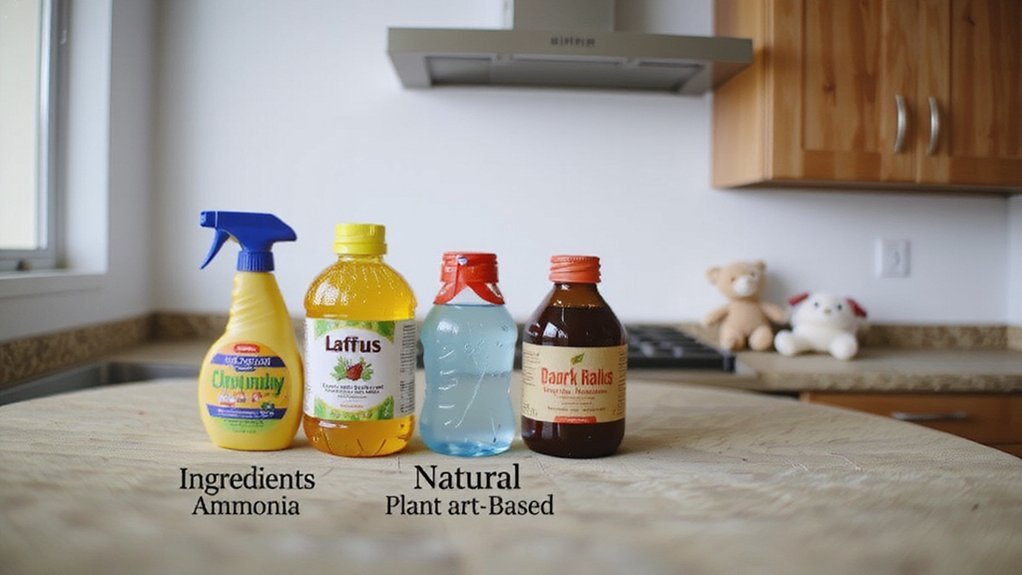
As you switch to kid-friendly cleaners, focus on avoiding ingredients that are linked to irritation, allergic sensitization, or respiratory harm—common culprits include fragranced mixtures (and hidden phthalates), volatile organic compounds (VOCs) such as benzene and toluene, formaldehyde‑releasing preservatives (e.g., DMDM hydantoin, quaternium‑15), triclosan/triclocarban, quaternary ammonium compounds (quats), strong surfactants like sodium lauryl sulfate, and isothiazolinone preservatives (methylisothiazolinone), all of which have evidence tying them to dermatitis, asthma exacerbation, or endocrine disruption. Choose safer alternatives: fragrance‑free formulations, plant‑derived surfactants (decyl glucoside), hydrogen peroxide or citric acid for disinfection, alcohol (70%) where appropriate, and preservative systems with documented safety. Read labels, prioritize third‑party certifications, and trial single‑ingredient swaps to monitor tolerance. You’ll reduce exposure while keeping cleaning effective and innovative. Consult clinicians for complex allergy concerns.
Best Kid-Friendly Allergen-Reducing Sprays and Surface Cleaners
Having removed high‑risk ingredients, you’ll next want sprays and surface cleaners that demonstrably lower allergen load—dust‑mite proteins, pet dander, pollen and mold spores—without adding respiratory irritants. Choose products with peer-reviewed efficacy data: enzymatic formulations that break down allergenic proteins, or salt‑based sprays that denature structures, both validated in controlled studies to reduce detectable allergen levels. Prefer fragrance‑free, low‑VOC labels and transparent ingredient lists; third‑party certification (e.g., asthma‑friendly, EPA Safer Choice) supports claims. Apply per manufacturer instructions to contact time and surface compatibility; improper dilution or use limits performance. For children, select non‑toxic, rapidly evaporating carriers and minimal preservatives. Track symptom changes and allergen measurements if possible; iterative testing helps you adopt innovative, evidence-aligned cleaners that truly protect sensitive kids. Reassess choices regularly with clinicians.
Vacuuming and Air Filtration: Picks That Cut Dust and Pollen
When you prioritize vacuuming and air filtration, you reduce airborne and settled allergen loads that commonly trigger symptoms in children. Choose a vacuum with a true HEPA filter and sealed system; studies show these capture ≥99.97% of particles ≥0.3 µm, lowering indoor dust and pollen. For air purifiers, target units with CADR matched to room volume and HEPA or HEPA-like filtration; aim for 4–6 air changes per hour in bedrooms. Look for low-noise models and intuitive controls so you’ll run them consistently. Replace filters per manufacturer intervals and vacuum with motorized brush heads weekly in high-traffic zones. Combining scheduled vacuuming and correctly sized purifiers gives measurable allergen reductions, improving symptom burden while fitting modern, kid-safe households. Consult your pediatrician for severe or persistent symptoms today.
Laundry and Bedding Solutions for Allergen Control
Because bedding traps dust mites, pet dander, pollen, and skin flakes that drive many childhood allergic symptoms, you should use targeted laundry and barrier strategies to reduce exposure. Wash sheets, pillowcases, and soft toys weekly in hot water (≥130°F/54°C) or use allergen-reducing detergents formulated for sensitive skin if heat isn’t feasible. Tumble-dry on high for at least 20 minutes to denature mite proteins. Encase mattresses and pillows in certified allergen-impermeable covers; choose breathable, zip-sealed fabrics tested for pore size. Replace pillows every two years and wash or freeze washable toys monthly. Consider hypoallergenic detergents free from fragrances and dyes. Validate results with periodic allergen test kits or consult your pediatric allergist for targeted protocols tailored to your child’s sensitivity and local Vegas allergen profiles.
Non-Toxic Disinfecting Options for High-Touch Areas
Alongside managing bedding allergens, you also need to reduce microbial load on doorknobs, light switches, toys, and other high-touch surfaces to protect children with developing immune systems. Choose EPA-safer-list products or 0.05% hypochlorous acid sprays; both provide broad antimicrobial activity with minimal residue and low irritancy. Use hydrogen peroxide (0.5–3%) wipes for short-contact disinfection where labeled, and ethanol-based wipes (60–70%) for rapid viral inactivation on nonporous items. Avoid undiluted bleach near kids and don’t mix agents. Apply contact time per label, let surfaces air dry, and ventilate rooms during use. For toys, prioritize dishwasher-safe plastics or ultraviolet-C sanitizers designed for consumer use, validated by independent testing. Document choices and monitor children’s tolerance; adjust if irritation occurs. Notify pediatrician or poison control for adverse reactions.
Simple Daily and Weekly Routines to Keep Vegas Dust at Bay
Regularly keep dust under control with short, consistent habits you can sustain—daily quick wins and a focused weekly session reduce particulate load, allergens, and respiratory triggers for kids. Each day, you should vacuum high-traffic areas with a HEPA-filtered vacuum or use a microfiber electrostatic cloth to capture fine particles; target floors, surfaces at child height, and bedding. Run air purifiers with HEPA filters on low during occupancy and higher when unoccupied. Weekly, deep-clean: wash bedding in hot water (≥130°F/54°C), mop with damp microfiber, dust vents and ceiling fans, and filter-check HVAC/portable units. Track symptoms and adjust routines; evidence shows consistent removal of settled dust lowers indoor allergen concentrations. You’ll protect children’s respiratory health while adopting scalable, innovative practices and reduce caregiver stress measurably now.
Conclusion
You’ll protect sensitive children by prioritizing low‑VOC, fragrance‑free cleaners, HEPA filtration, regular hot‑water bedding washes, and cautious use of hydrogen peroxide or 70% alcohol for spot disinfection. Evidence shows these steps reduce airborne and surface allergens without adding respiratory irritants. Follow label directions, choose third‑party certified products, and maintain routine cleaning frequency. You’re minimizing exposure while preserving efficacy and safety for babies and kids with developing lungs and skin, strengthening household resilience overall sustainably.
Leave a Comment