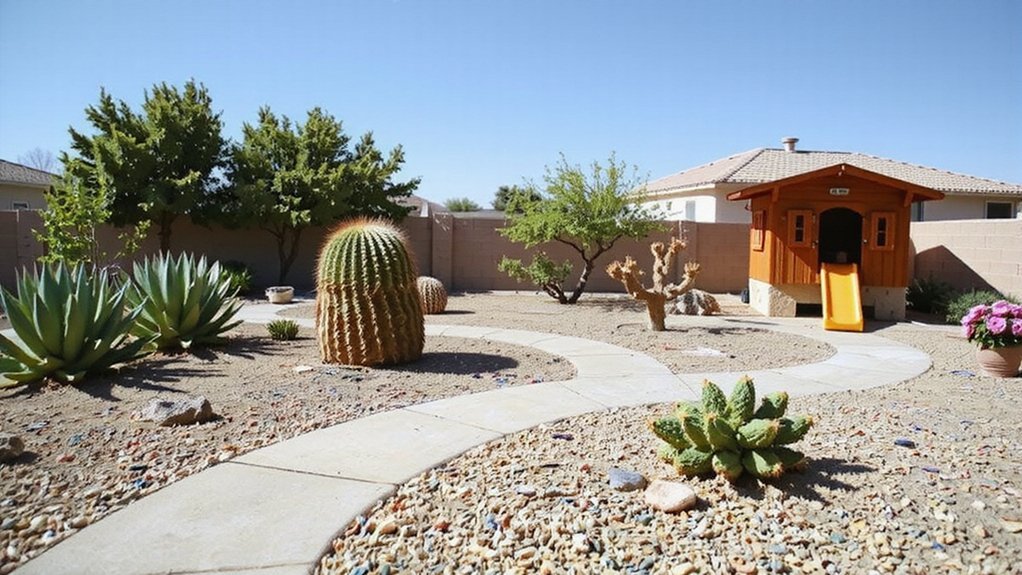

You’ll plan a Las Vegas backyard that shields kids from heat, cuts water use, and supports pollinators. Cluster UPF canopies with native palo verde or mesquite, add permeable, non‑slip surfacing, and low‑flow recirculating splash pads and mist lines. Keep sightlines clear and storage durable—next, practical layouts and plant lists.
Shaded Play Zones With UV Protection
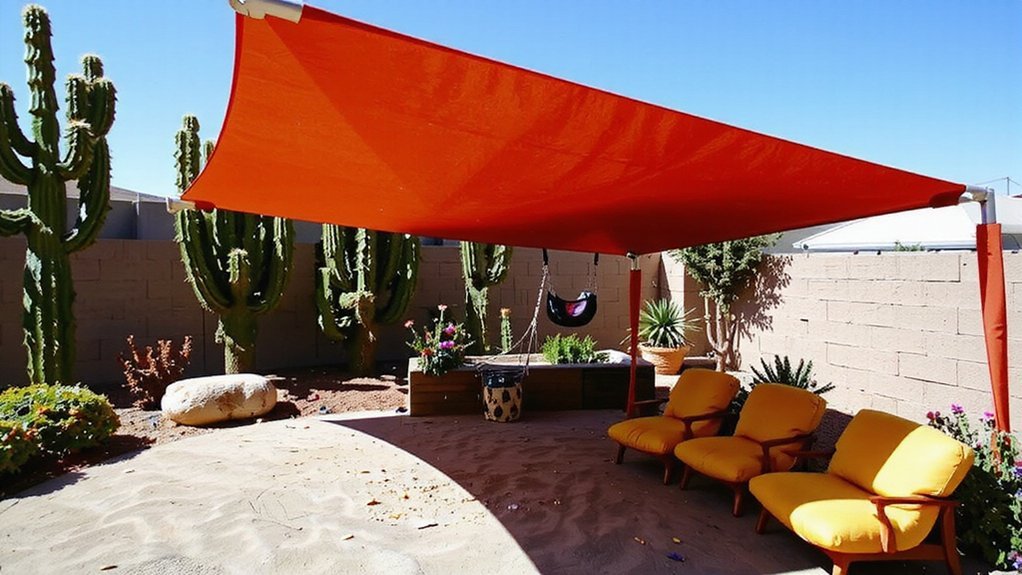
When you plan shaded play zones, prioritize materials and geometry that block UV while maintaining airflow and visibility. You’ll select high UPF fabrics — tensile PTFE, HDPE knit shades — sized to create overlapping canopies that cut direct sun by 90% while channeling breeze. Configure angled panels and louvered pergolas to cast moving shade, mapping solar paths to minimize midday exposure. Anchor systems must meet wind-load specs and use corrosion-resistant fittings; inspect tension, deflection, and drainage. Integrate translucent polycarbonate for peripheral light where needed, specifying UV-stabilized grades to prevent degradation. Consider modular, reconfigurable frames so the shade adapts as trees grow and play patterns change. You’ll balance protection, sightlines, and maintenance with measurable performance targets. Set inspection intervals, and log UV-attenuation metrics every three months consistently.
Soft, Non-Slip Surfacing Options
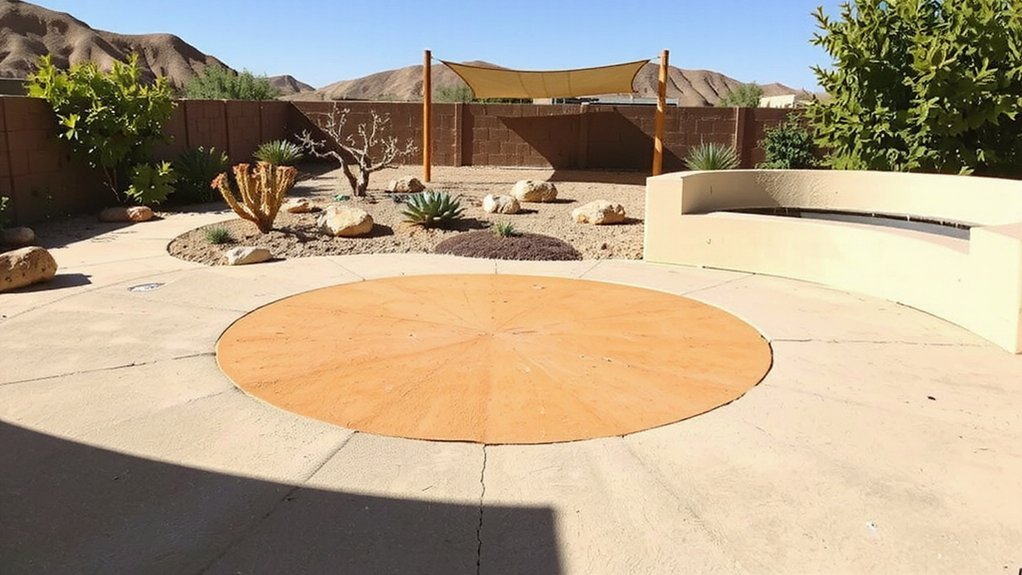
Start by prioritizing surfaces that combine impact attenuation, high friction, and thermal management for Las Vegas heat. You’ll evaluate poured-in-place rubber, engineered turf with shock pads, bonded rubber mulch, and interlocking EVA tiles. Choose materials with tested G-max ratings, UV-stable pigments, and infrared-reflective coatings to reduce surface temperature. Specify non-slip textured finishes, micro-aggregate topcoats, or ribbed patterns to maintain traction when dusty or slightly damp. For underlayers, use permeable drainage mats and closed-cell foam pads to prevent compaction and heat transfer from substrate. Color selection — lighter tones and speckled mixes — lowers radiant gain. Prioritize ASTM and ADA compliance, easy maintenance protocols, and modular replacement zones so you can adapt surfaces as children grow and play demands evolve. Install test patches before full installation deployment.
Water-Conserving Splash Features
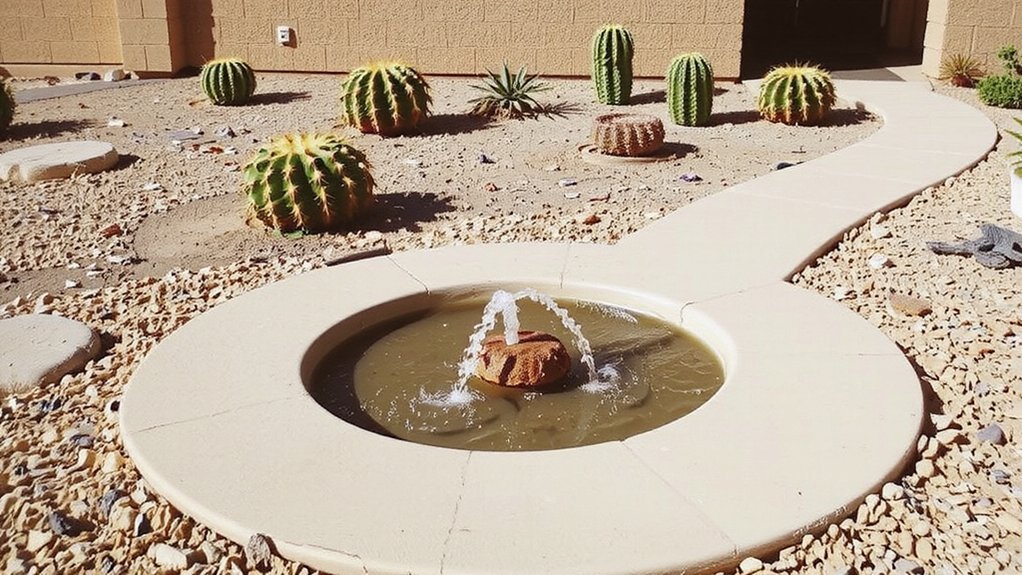
Conserving water in Las Vegas means designing splash features that recirculate, meter, and minimize evaporation without sacrificing play value. You’ll prioritize closed-loop systems: submersible pumps, sealed reservoirs, and inline filters that keep turnover high while cutting losses. Metering controls—programmable timers, flow restrictors, and sensor-triggered bursts—let you deliver memorable jets on demand instead of constant spray. Choose shallow play decks with textured surfaces and peripheral drains to channel water back to storage quickly; avoid deep basins that increase evaporation. Consider covered or shaded spray zones, low-angle nozzles, and misting sequences that use droplets efficiently. Integrate visible diagnostics—flow meters and leak alarms—so you can monitor performance and tune settings. Implementing them reduces utility costs and maintenance demands predictably.
Native and Drought-Tolerant Plant Choices
Pair your water-wise splash areas with a planting palette engineered for Las Vegas’ heat, alkalinity, and infrequent storms. Choose native shrubs like desert willow, creosote, and brittlebrush for structural shade and aerodynamic leaf forms that reduce transpiration. Integrate drought-tolerant perennials — penstemon, salvia, gaura — in clusters to create windbreaks and visual corridors. Favor taprooted species and gravelly soil to promote deep rooting and stormwater infiltration. Use mulch rings, subsurface drip, and pulse irrigation tied to soil-moisture sensors to minimize runoff and evaporation. Select non-invasive, low-pollen varieties to keep play areas clean and allergen risk low. Arrange plants by water-use zones and growth habit for predictable maintenance windows and long-term resilience in arid urban microclimates. Incorporate native grasses and succulents for texture, erosion control, and contrast.
Sensory Gardens and Kid-Friendly Edibles
Designing a sensory garden for kids lets you combine tactile textures, bright colors, and edible plants that tolerate Las Vegas heat and alkaline soils. You’ll map micro-zones: gravel tactile paths, decomposed granite for barefoot contrast, and raised beds with well-draining mix. Choose edible succulents (opuntia pads, purslane), compact herbs (lemon verbena, rosemary, thyme), and resilient fruiting shrubs (goji, dwarf pomegranate). Integrate visual anchors—silver foliage, magenta blooms, citrus-green leaves—for immediate recognition. Include sensory stations: herb rubs, soft-grained sandboxes, and seed pods for cracking. Use durable, non-toxic materials and clear labeling to teach plant ID, seasons, and water logic. Maintain low irrigation via drip lines and wetting agents. You’ll prototype modular plots so kids can harvest, observe pollinators, and repeat experiments safely with measurable learning outcomes.
Cool-Down Strategies for Extreme Heat
When summer temperatures spike, you’ll prioritize strategies that drop surface and ambient heat quickly and safely for children. Plant clustered native trees and drought-tolerant shrubs to create layered canopy and increase evapotranspiration, lowering microclimate temperature by shade and latent heat flux. Integrate targeted misting lines and low-pressure nozzles over play zones for rapid adiabatic cooling—use automatic timers and wind sensors to limit humidity and water use. Deploy high-albedo, breathable textiles for temporary shade; fabrics should reflect shortwave radiation while allowing convective airflow. Incorporate shallow splash pads with recirculating filtration to provide conductive cooling without deep water hazards. Monitor conditions with a simple ambient sensor and shade-temperature map so you can iterate placement and timing for peak effectiveness. Maintain drought-smart scheduling and real-time alerts remotely.
Safe, Low-Maintenance Hardscaping
After installing shade and misting systems, plan hardscaping that keeps surfaces cool, slip-resistant, and low-maintenance. Choose permeable pavers with light-reflective coatings to reduce heat absorption; their textured finish improves traction when wet. Integrate compacted decomposed granite paths stabilized with resin for smooth wheelchair-friendly routes that shed water. Use modular concrete unit pavers with anti-slip grooving near entries and seating zones for predictable footing. Position native gravel beds and dry river channels to minimize runoff and maintenance while defining play boundaries. Specify UV-stable sealants and powder-coated metal edging to prevent material degradation. Route drainage beneath slabs with gravel trenches and geo-fabric to avert pooling. You’ll get a durable, low-upkeep surface palette that prioritizes safety, thermal comfort, and long-term performance. Inspect annually and repair minor defects.
Play Structures Built for Desert Conditions
Because you’ll be installing equipment where sun, heat, wind and sand are constant factors, specify play structures with UV-stable, heat-reflective finishes, ventilated elevated platforms, and components that minimize thermal conduction to touch surfaces. Choose corrosion-resistant fasteners, sealed bearings, and stainless or powder-coated aluminum hardware to withstand abrasive dust and infrequent moisture. Integrate shade sails or rigid canopies engineered to dissipate heat loads and anchor for high winds; orient platforms to reduce solar exposure during peak hours. Use perforated decking, mesh panels, and airflow channels to lower surface temperatures while maintaining structural rigidity. Select impact-attenuating surfacing that resists compaction and drains granular fines. Plan modular assemblies for straightforward replacement of degraded panels, and document maintenance intervals keyed to material performance in arid cycles. Seasonal checks.
Creative Storage and Outdoor Seating for Caregivers
Designing integrated storage and seating lets you supervise, rest, and access gear without leaving sightlines or battling dust and heat. Specify bench-seat modules with sealed under-seat compartments, gasketed lids, and sloped tops to shed sand. Use UV-stable composite or powder-coated aluminum for durability; choose stainless steel fasteners. Incorporate ventilated, lockable bins for chemicals and first-aid, and separate drain channels to avoid standing water. Add removable, breathable cushions with cooling textile and quick-release straps for washing. Mount low-profile modular hooks, tool racks, and cable channels for toys and hoses. Integrate shaded cantilever canopies or attachable umbrella sockets. Include recessed solar panels and USB ports for low-voltage lighting and device charging. Plan dimensions for caregiver sightlines and ergonomic seating height and secure childproof latches tested annually.
Wildlife-Friendly Elements and Pest-Safe Planting
Incorporating wildlife-friendly features while minimizing pest risk starts with a layered planting plan: place drought-tolerant native shrubs and flowering perennials (e.g., penstemon, desert marigold, brittlebush) in clustered beds to support pollinators, then buffer play zones with low, thornless, non-fruiting groundcovers and gravel pathways to reduce hiding spots for snakes and rodents. You’ll add isolated water stations—shallow, recirculating basins with escape ramps—to hydrate birds and beneficial insects while preventing mosquito breeding. Use rigid edging, elevational breaks, and smooth rock mulch to deter burrowing. Favor aromatic, pest-repellent species like rosemary and sage for borders. Design sightlines and maintain 2–3 foot clear zones around play equipment for visibility. Monitor plant health with targeted, biological controls; avoid broad-spectrum pesticides to preserve beneficial invertebrates. You’ll also schedule seasonal inspections.
Conclusion
You’ll create a safe, low-water Las Vegas backyard that shades play, slows heat, and supports pollinators. Cluster native trees and UPF canopies to frame clear sightlines; specify non-slip, impact-rated surfacing and permeable drainage. Install shallow recirculating splash pads, shaded mist lines, and drip-irrigated drought shrubs. Choose thorn-free natives, durable UV-stable seating with integrated storage, and enclosed play zones. Maintain seasonal pruning, filter checks, and mulching to minimize pests and upkeep while encouraging year-round exploration safely.
Leave a Comment