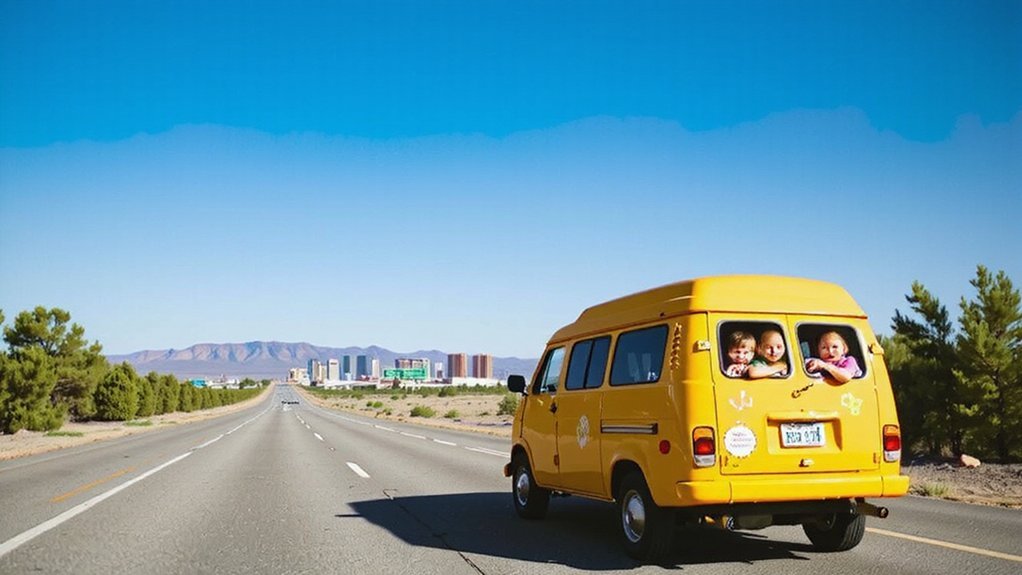

You’ll want a plan that keeps kids calm, fed, and entertained while you navigate traffic and parking on the Strip. Time your departures, schedule play breaks, pack smart snacks and activity kits, and pick a family-friendly hotel with easy access to attractions. There are smart ways to save time and stress — here’s how to pull it off step by step.
Choosing the Best Driving Route for Families
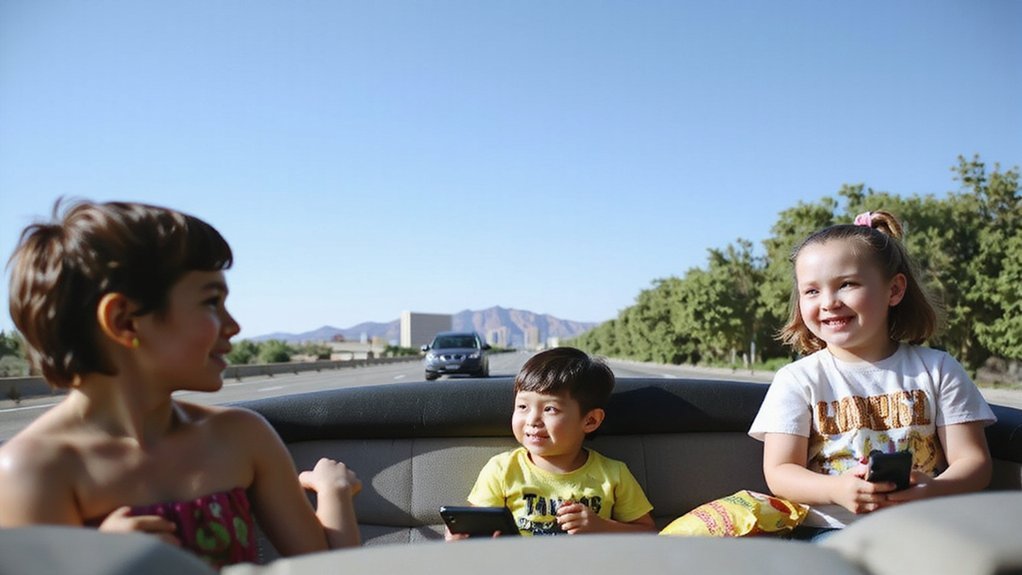
How far do you want to drive each day? Choose routes that balance straight highway time with short, interesting detours so kids stay engaged and you stay relaxed. Pick roads with reliable services—rest areas, family-friendly diners, and easy parking—plus options for quick outdoor play. Consider scenic byways for learning moments: state parks, roadside museums, and quirky attractions spark curiosity. If you’re using an EV, prioritize corridors with dependable chargers and plan mileage buffers. Avoid complex urban loops at peak traffic and prefer predictable interstates when you want simpler navigation. Use mapping tools that layer safety data, elevation, and construction alerts to compare alternatives. Keep your route flexible so you can opt for the smartest, most enjoyable path for your family and future-focused experiences today.
Timing Your Drive: When to Depart and Breaks to Schedule
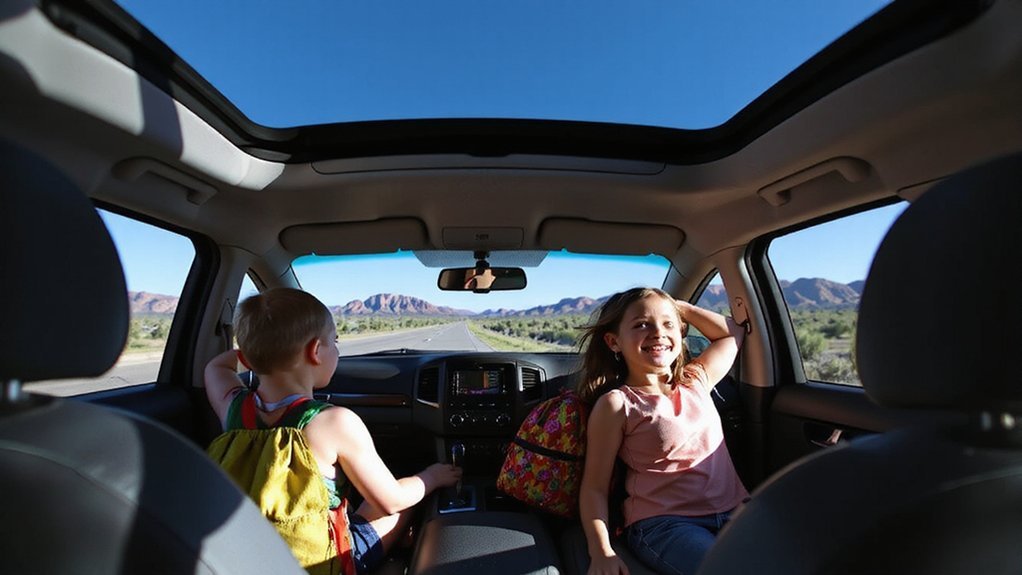
Once you’ve picked a route, plan when you’ll leave and where you’ll stop so the whole family stays comfortable and sane. Aim for departures that match kids’ sleep — early mornings for sleepers, late afternoons for nappers — to reduce squabbles and screen reliance. Schedule breaks every 90–120 minutes for stretching, bathroom stops, and a quick active game that resets energy. Use apps to scout parks, family-friendly diners, and scenic pullouts; book longer stops near attractions so kids can burn energy. Build flexibility: factor in extra time for unexpected delays and sprinkle surprise mini-rewards like a special snack or sticker. By syncing departure times and purposeful breaks, you’ll keep momentum, minimize stress, and create memorable, kid-centered travel rhythms. You’ll arrive happier, relaxed, and ready.
Packing Essentials for Kids and Road Comfort
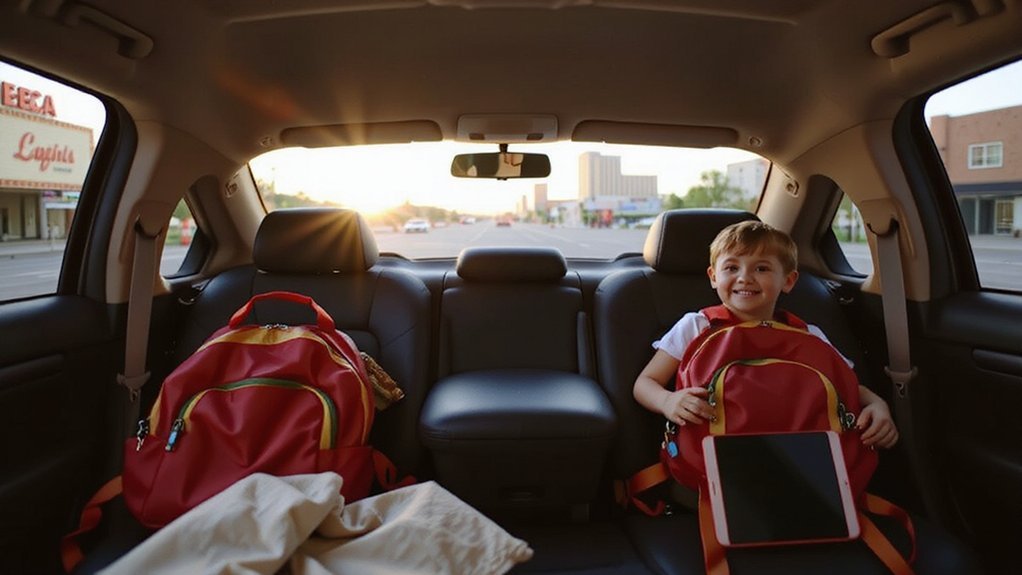
Because long drives test little patience, pack a small, clearly labeled bag for each child with layers (light jacket and socks), a cozy blanket or soft toy, kid-sized headphones, chargers or a power bank, and easy-to-eat non-messy snacks and a refillable water bottle. Then suggest organization: use zip pouches, clip-on bags, wet wipes, hand sanitizer, travel potty, backseat organizer, neck pillows, sunshades, first-aid, copies of documents, comfort schedule, motion-sickness remedies (mention non-medical?), portable night light, tablet with downloaded content, charging hub, adhesive labels, small activity kits, collapsible cooler for drinks, spill-proof cups, and a routine for rest stops. You’ll reduce stress, keep kids comfortable, and stay ready for the unexpected. Experiment with compact innovations—modular bins and magnetic mounts—to personalize each child’s space and comfort.
Kid-Friendly Snacks and Meal Planning on the Road
You’ve packed the blankets and organizers—now plan the food so hunger won’t hijack the trip. Pack a mix of protein, fruit, and crunchy snacks in reusable containers: turkey roll-ups, cheese cubes, grapes, apple slices with lemon, and homemade trail mix with seeds. Preportion meals into bento-style boxes for easy reach and minimal crumbs. Bring insulated jars for warm soups or pasta when you want a comfort stop. Keep a small cooler with ice packs and a stash of spill-proof cups and wet wipes. Rotate flavors and introduce one novelty snack per day to keep kids curious. Map grocery or farmer’s-market stops along your route to restock fresh options and support local makers while you drive smarter and happier. Stay flexible and note allergies please.
Car Entertainment and Screen-Free Activity Ideas
Packing a variety of hands-on activities keeps kids entertained without screens and makes the miles go by smoother. You can create portable activity kits with magnetic travel games, dry-erase storyboards, and compact craft supplies in resealable pouches. Rotate toys so novelty stays high: puzzle cubes, sticker scenes, and simple science kits work well. Turn learning into play with scavenger bingo tailored to the route, audio stories you control, and parent-guided storytelling prompts that spark imagination. Include quiet options like fidget shapes and reusable tracing pads for naps or long stretches. Plan quick surprise packets to reward good behavior. With thoughtful curation and a few innovative items, you’ll cut complaints, boost engagement, and keep the car atmosphere calm and creative and build lasting family memories.
Planning Rest Stops and Scenic Pit Stops Along the Way
Plan out regular stops so the whole family can stretch, refuel, and reset—aim for a break every 90–120 minutes or whenever energy and moods dip. Use mapping apps to flag parks, overlooks, roadside attractions, and quirky local museums; pre-save options and alternate routes so you can pivot when kids need a surprise. Turn pauses into mini-adventures: a five-minute scavenger hunt, quick picnic with local snacks, or a selfie challenge at a viewpoint. Look for rest areas with playgrounds, public art, or walking trails to burn energy and spark curiosity. Keep a lightweight kit with wipes, layered clothing, reusable water bottles, small games, and a tablet charged for emergencies. Rotate leaders so everyone helps pick stops and stays engaged. Review photos together to create memories.
Safe Car Seating, Motion Sickness, and Health Tips
When you’re buckling the kids in, make car-seat safety your top priority: follow manufacturer height and weight limits, keep little ones rear-facing as long as recommended, secure boosters correctly, and double-check that harnesses are snug with the chest clip at armpit level. Plan regular stops to reset seating and let kids move; motion-sickness prevention can include fresh air, activities, ginger chews, or acupressure wristbands. Pack a compact health kit with bandages, thermometer, sanitizer, prescriptions and allergy meds. Keep hydration and snacks handy to avoid sugar spikes and crankiness. Use sunshades, a mirror to monitor rear passengers, organizers to keep items within reach. If using medication, consult your pediatrician beforehand. These steps blend safety and smart design so your drive stays calm, comfortable, and innovative.
Family-Friendly Lodging Options Near the Strip
After a long drive and careful safety checks, you’ll want a hotel that keeps everyone relaxed and entertained without straying far from the Strip. Choose accommodations that prioritize space—two-room suites, rollaway-friendly layouts, or connecting rooms—so kids nap without disturbing others. Look for in-room kitchenettes, onsite laundry, and early check-in to reboot faster. Pools with shallow areas, gated play zones, and supervised kids’ programs add convenience without venturing out. Opt for hotels with touchless check-in, smart thermostats, multiple USB outlets, and secure parking to streamline your stay. Confirm stroller access, quiet floors, and flexible cancellation. Book where staff understand families: they’ll help with cribs, bedtime routines, and local logistics so your road-trip reset feels effortless. Consider loyalty perks, kid-friendly menus, and adaptable meal plans daily.
Kid-Approved Attractions on and Near the Las Vegas Strip
Although the Strip’s neon can feel grown-up, you’ll find plenty of kid-ready stops that keep the whole family entertained without a long detour: hands-on exhibits and splash-friendly play areas, the Aquarium at Silverton and Shark Reef at Mandalay Bay, the Adventuredome indoor theme park, gondola rides at the Venetian, the High Roller observation wheel, family shows and street performers, and tasty, interactive stores like M&M and Hershey’s. Plan short blocks of activity, mixing sensory stops with mellow breaks so kids recharge. You can schedule a midday aquarium visit, spin the High Roller at sunset for citywide views, or pair an Adventuredome session with a casual meal. Use hotel apps to reserve tickets, skip lines, and stay flexible for naps, quick snacks and surprise discoveries.
Budgeting, Parking, and Saving Money as a Family
With kid-friendly stops lined up, plan for parking, food and ticket costs so surprises won’t derail your day. Start by setting a realistic daily budget and share it with kids — turning spending limits into a simple game helps buy-in. Use parking apps to compare rates, choose self-park over valet when possible, and look for hotels offering free parking for families. Pack refillable bottles and snack kits to cut impulse purchases. Hunt combo attraction passes, weekday discounts, and kids-eat-free deals; book timed tickets in advance to avoid premium prices. Use loyalty programs and credit-card perks for meals or rides. Track expenses on your phone so you adjust plans in real time and keep the road trip fun without overspending and create memorable, budget-smart family moments.
Preparing for Unexpected Delays and Emergencies
If traffic snarls or a flat tire slows you down, you’ll want a simple, practiced plan so the kids stay calm and you solve the problem fast. Pack a compact emergency kit: first-aid, flashlight, jumper cables, tire inflator, multitool, water, snacks, and charging bank. Teach kids short calm routines—seatbelt check, quiet game, or drawing pad—so they know what to do while you assess. Save digital copies of health cards and roadside assistance in an accessible app and share ETA updates with a designated contact. Learn basic tire change and battery jump skills before you leave; a quick hands-on tutorial makes them usable under stress. Review this checklist together; practice reduces panic and keeps your trip resilient and innovative. Celebrate small wins and adapt swiftly.
Conclusion
You’ll have a smoother, happier Las Vegas road trip when you plan routes with short play breaks, pack labeled activity bags and motion-sickness remedies, and pick hotels with easy parking and ticket pickup. Bring bento snacks, chargers and a simple safety kit, map chargers or fuel stops, and book timed attractions. Stay flexible, keep routines calm, and use quick games to turn delays into fun — so everyone arrives relaxed and ready to explore together.




Leave a Comment