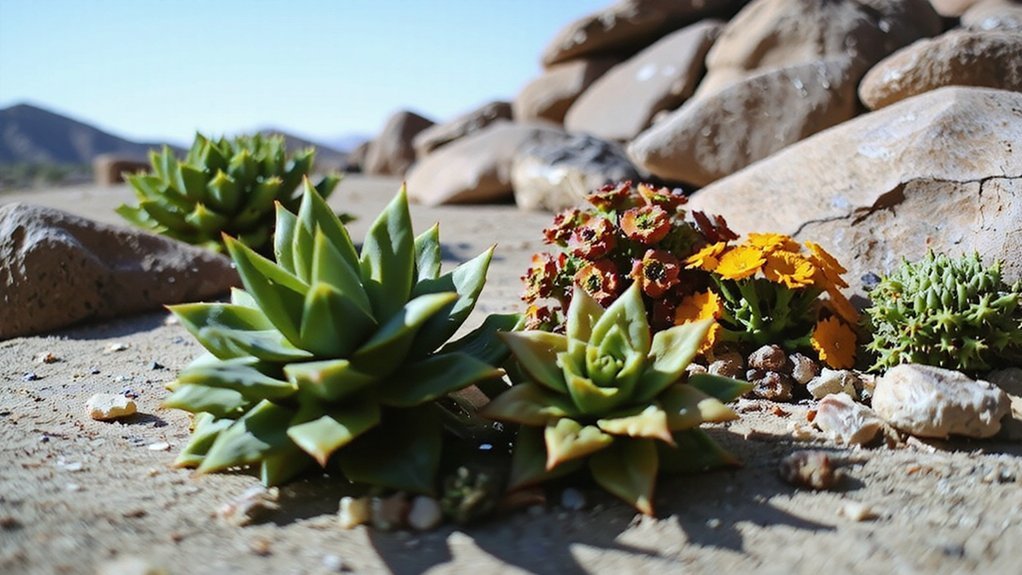

In Las Vegas heat, you can create a kid‑safe, low-water garden by choosing xeric, non‑toxic species with soft foliage, minimal thorns and shallow roots. You’ll favor spineless succulents, thornless shrubs, sensory herbs and small native trees placed for clear sightlines and play zones. Keep maintenance and irrigation practical — and I’ll show which species suit your yard and where to place them.
Overview of Kid-Safe Desert Plants
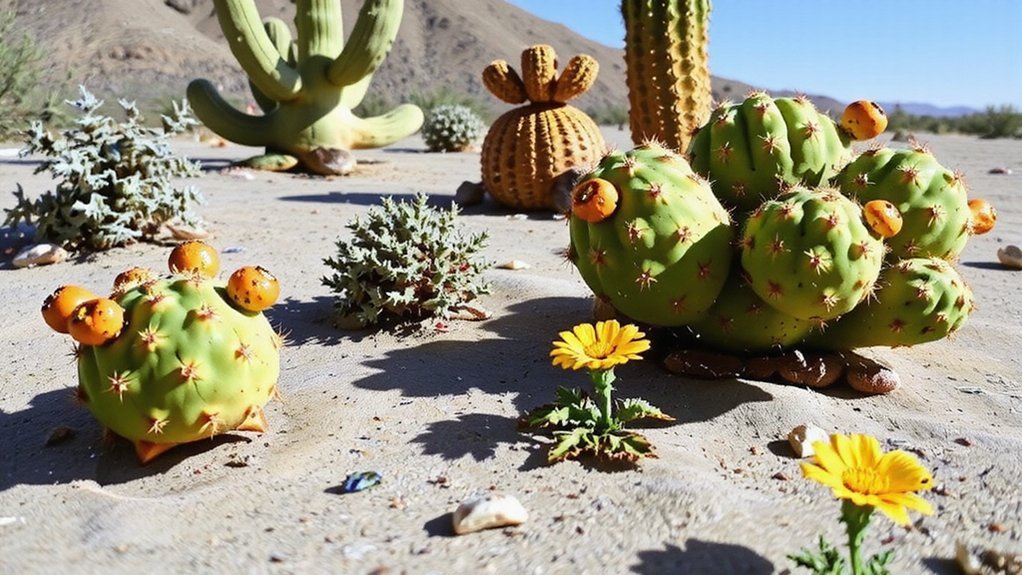
When you design a child-friendly Las Vegas landscape, prioritize desert-adapted species that combine non-toxicity, low physical hazard, and drought resilience. You’ll select plants with smooth textures and minimal spines—think soft-leaved agaves avoided, opting instead for spineless succulents and broad-leaf yuccas bred for reduced sharpness. Favor natives like brittlebush and desert marigold for proven arid performance and low allergenicity; group them by mature size to prevent overcrowding and tripping risks. Choose non-invasive groundcovers that suppress dust and stabilize soil without toxic sap. Plan irrigation zones to maintain moderate growth and reduce brittle limbs. Label experimental plantings and monitor child-plant interactions, iterating selections based on observed safety and maintenance demands to advance innovative, resilient play landscapes. Test shade, color contrast, and tactile variety for developmental engagement.
Best Non-Toxic Trees for Small Yards
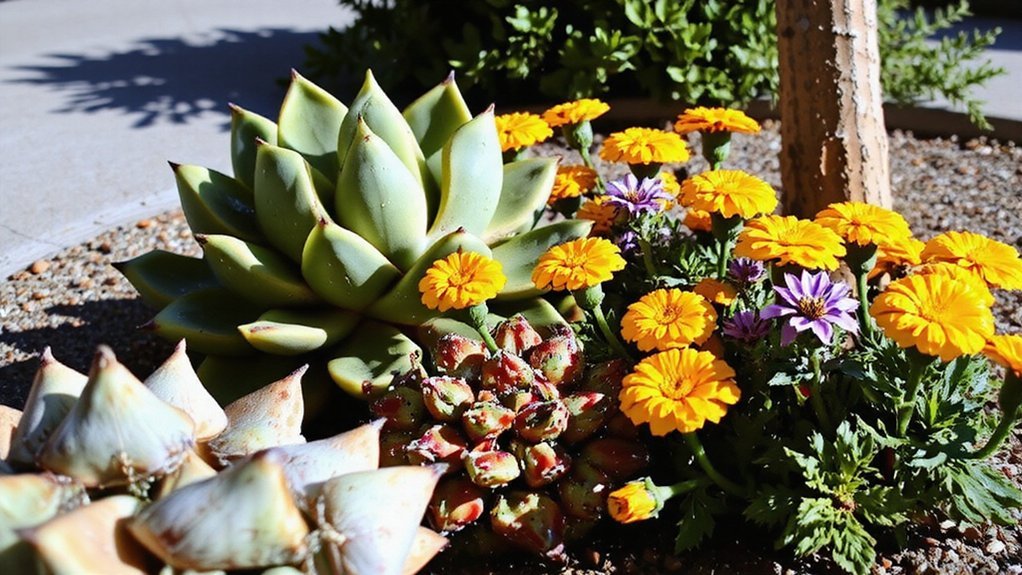
Moving from low-growing, spineless plant choices, pick small trees that keep play areas safe while matching Las Vegas’ arid climate. You’ll favor thornless, non-toxic species under 20 feet: Palo Verde (Parkinsonia spp.) offers nitrogen-fixing roots and sparse litter; desert willow (Chilopsis linearis) provides insect-attracting flowers without poisonous parts; netleaf hackberry (Celtis reticulata) makes a sturdy, drought-tolerant shade tree with edible, non-toxic fruit. Sit trees at least 10–15 feet from play surfaces, use root barriers to protect foundations and remove seed pods promptly. Select cultivars with reduced debris and avoid species with spines or toxic seeds. Prune to maintain clear sightlines and canopy height. Monitor children near fruiting trees and teach safe harvesting habits.
Shrubs and Groundcovers Safe for Children
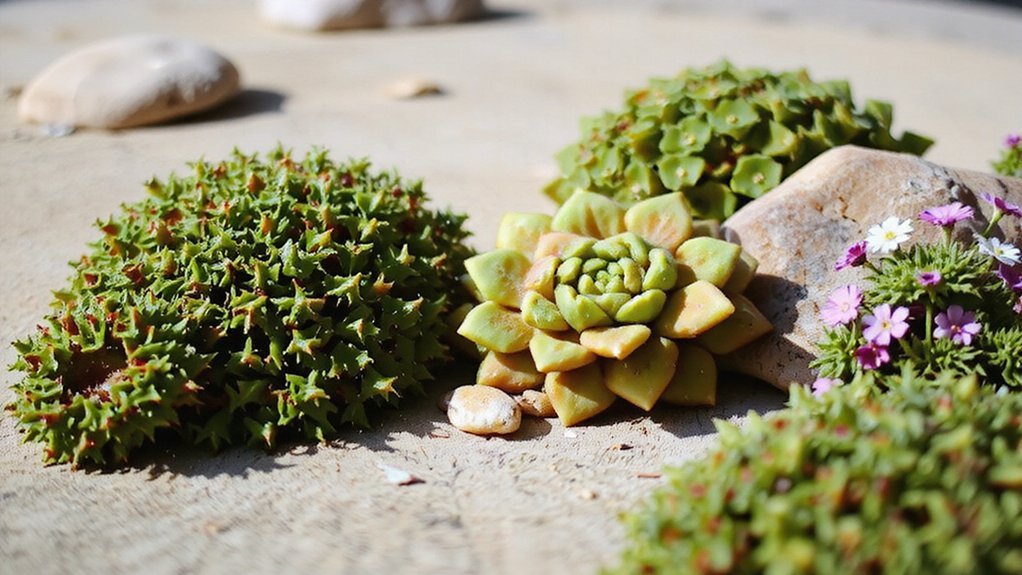
Safety guides your plant choices: pick thornless, non-toxic shrubs and low groundcovers that tolerate Las Vegas heat and won’t tempt kids to chew leaves or grab spiky stems. You should prioritize drought-tolerant, low-maintenance species with edible or inert foliage: Salvia rosmarinus (rosemary) and Salvia officinalis provide aromatic, thornless structure; Thymus spp. (creeping thyme) and Sedum spp. form resilient, low mats that cushion play; Trifolium repens (white clover) fixes nitrogen and invites minimal toxicity risk. Choose native, non-toxic grasses such as Bouteloua and Muhlenbergia for soft edges. Use mulches and defined edging to limit access to irrigation basins. Label plants with botanical names, and train children not to ingest foliage. This creates an innovative, safe landscape framework for play. Monitor growth and prune for visibility.
Flowering Perennials That Thrive in Las Vegas
Extend your kid‑friendly palette upward by choosing flowering perennials that tolerate Las Vegas heat, use minimal water, and carry little to no toxicity risk. Select species like California fuchsia (Epilobium canum), blanket flower (Gaillardia spp.), and penstemon (Penstemon spp.) for reliable drought tolerance and documented non-toxicity; plant them in well‑drained soil and full sun. Space plants to improve airflow and reduce disease; stake taller penstemon to prevent collapse. Mulch lightly to conserve moisture but don’t pile deeply against stems that invite rot. When introducing plants, supervise children and teach them not to chew leaves or flowers. For innovative variety, mix bloom times and textures to maintain seasonal color without fertilizer dependence, prioritizing safety and resilience in your landscape. Check labels and consult local extension.
Edible and Sensory Plants for Little Explorers
How can you create a safe, edible sensory garden that actually thrives in Las Vegas heat? Design compact beds and containers with heat-tolerant edibles like basil, culinary rosemary, dwarf pomegranate, and nasturtium for taste and color. Prioritize aromatic foliage — lemon balm, mint (contained), and sage — to teach scent recognition; label plants clearly and remove any look-alikes. Use tactile species such as lamb’s ear and culinary chives for contrasting textures. Provide afternoon shade cloth, mulched soil, and a simple drip irrigation schedule to reduce stress and prevent bolting. Practice strict hygiene: harvest promptly, rinse produce, and monitor for pests without harsh chemicals. Encourage supervised tasting, sensory journaling, and modular layouts so you can iterate quickly and safely with young explorers to build curiosity and resilience.
Low-Water Native Plants for Vegas Landscapes
Because Las Vegas gets intense heat and minimal rainfall, choose native species that evolved for low water, high sun, and alkaline soils — think creosote bush (Larrea tridentata), desert willow (Chilopsis linearis), brittlebush (Encelia farinosa), and black grama (Bouteloua eriopoda). You’ll select plants with proven drought physiology: deep taproots, reflective pubescence, reduced leaf area, or C4 photosynthesis. Position larger shrubs to provide shade corridors and grasses for play buffers. Prune desert willow to remove low branches and reduce entanglement hazards. Train children to respect brittle stems and avoid thorned volunteers; identify look‑alikes that carry sharp parts. Monitor for heat stress indicators (leaf scorch, wilting) and choose cultivars noted for non-toxicity. These choices give you resilient, safe, and innovative landscapes that conserve water and protect kids.
Planting and Soil Tips for Desert Success
After choosing drought‑adapted species, you’ll prepare soil and planting technique to promote deep roots, stable establishment, and safe play areas. Work with a light, free‑draining mix: native sandy loam amended with 10–20% coarse organic matter to improve water retention without compaction. Dig planting holes twice the root ball diameter and backfill to original depth; set crowns level to avoid rot. Create 3–4 inch mulch rings of inorganic or non-toxic organic material, keeping mulch 2–4 inches from stems to deter rodents and fungal issues. Grade soil to direct runoff away from foundations and play surfaces. Stake young trees only where wind risk demands it, using flexible ties and quick‑release methods. Label plantings with non‑toxic markers for child safety and future planning. Monitor establishment first season.
Child-Safe Maintenance and Pest Control
When you maintain kid‑friendly plantings, prioritize prevention and least‑toxic responses to pests and diseases. Inspect foliage weekly for aphids, spider mites, scale, and fungal lesions; early removal of affected leaves and isolation of infested specimens reduces spread. Choose biological controls—predatory insects, Bacillus thuringiensis for caterpillars, and use horticultural oils or insecticidal soaps when needed; apply in cool hours and follow label directions. Mulch with inorganic gravel or clean organic compost to moderate soil moisture and discourage slugs, while keeping mulch away from trunks to prevent rot. Prune for airflow and sun penetration to limit fungal growth. Store fertilizers, pesticides, and sharp tools locked and out of children’s reach. Keep records of treatments and plant responses to refine safe, data‑driven maintenance strategies and monitor results.
Design Ideas for Kid-Friendly Desert Yards
Although desert conditions demand drought‑tolerant choices, you can create a yard that balances safe play, low water use, and botanical suitability. Zone the space: designate a compact soft-play area with engineered wood fiber or artificial turf rated for shade and heat, surrounded by decomposed granite paths to reduce dust. Select non-toxic, low-canopy shrubs (e.g., brittlebush alternatives, bird-friendly sages) and mass succulents with rounded leaves to minimize injury. Use raised planter beds and edge barriers to separate planting zones from play surfaces. Incorporate shade structures, reflective materials, and drip irrigation with root-focused emitters to optimize water and microclimate. Label plants clearly and design sightlines for supervision. These measures keep maintenance minimal while supporting a resilient, child-safe desert landscape. Pilot small areas first to validate performance.
Conclusion
You’ll create a safe, water‑wise Las Vegas yard by selecting non‑toxic, spineless succulents, thornless shrubs, desert willow or palo verde saplings, and edible herbs. Group plants by mature size, install root barriers and raised beds, maintain clear sightlines, and use drip irrigation with mulch. Teach kids to respect plant textures, label species, and prune outside play zones. With attentive planting and low‑toxic pest methods, you’ll have a resilient, child-friendly desert landscape for years to come.
Leave a Comment